Most networking-enabled applications have to deal with timeouts. Read or write operations may continue indefinitely, and programs need a way to determine when to tear down connections, resend requests, or take whatever other measures are necessary.
Asio includes the deadline_timer class for managing timeouts. This class aims to provide a minimal interface for scheduling events. Of course, minimalism gives little in the way of design guidance, so some users struggle in finding an elegant way to incorporate timers and timeouts into their programs.
From the minimalist perspective of Asio, there's no one true right way to do it. (Perhaps there's no better proof of that than my design preferences having changed over the years.) Yet that answer doesn't get programs written, so in this post I will try to present a simple mental model for managing timers.
Parking meters
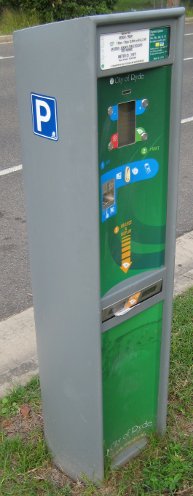
High-traffic, commercial areas near where I live have limited on-street parking. The street parking that is available is metered. It's the usual drill:
- Park your vehicle.
- Feed some coins into the parking meter (or, as is more likely these days, swipe your credit card or send an SMS).
- Go do whatever you came to do.
- Make sure you return to your vehicle before the meter expires.
If you don't get back in time, you'd better hope your vehicle hasn't had a visit from the parking inspector. A visit means a ticket under the wipers and a nasty fine due.
Parking meters are a good analogy for reasoning about timeouts because it's easy to identify the two actors:
- The driver of the vehicle.
- The parking inspector.
The driver performs the following steps:
- Feeds the meter.
- Leaves the vehicle to run some errands.
- Returns to the vehicle.
- If no ticket has been issued, repeats from step 1.
- If a fine has been issued, goes home.
The parking inspector's job is simple:
- Checks whether the meter has expired.
- If the meter has expired, writes up a ticket.
- If the meter has not expired, notes how much time is remaining.
- Goes off for a walk until the remaining time has elapsed.
Using the analogy to inform program design
Hopefully you've already guessed how these actors map to networked applications:
- The driver represents your protocol handling code.
- The parking inspector corresponds to your timeout management logic.
Let's take a look at how this works in a very simple use case.
// The "driver" actor.
void session::handle_read(error_code ec, size_t length)
{
  // On entering this function we have returned to the vehicle.

  if (!ec)
  {
    // Phew, no ticket. Feed the meter.
    my_timer.expires_from_now(seconds(5));

    // Process incoming data.
    // ...

    // Run some more errands.
    my_socket.async_read_some(buffer(my_buffer),
        bind(&session::handle_read, this, _1, _2));
  }
  else
  {
    // We got a ticket. Go home.
  }
}

// The "parking inspector" actor.
void session::handle_timeout(error_code ec)
{
  // On entering this function we are checking the meter.

  // Has the meter expired?
  if (my_timer.expires_from_now() < seconds(0))
  {
    // Write up a ticket.
    my_socket.close();
  }
  else
  {
    // Note remaining time and go for a walk.
    my_timer.async_wait(
        bind(&session::handle_timeout, this, _1));
  }
}
It's important to remember that the driver may need to run multiple errands each time they leave the vehicle. In protocol terms, you might have a fixed-length header followed by a variable-length body. You only want to "feed the meter" once you have received a complete message:
// First part of the "driver" actor.
void session::handle_read_header(error_code ec)
{
  // We're not back at the vehicle yet.

  if (!ec)
  {
    // Process header.
    // ...

    // Run some more errands.
    async_read(my_socket, buffer(my_body),
        bind(&session::handle_read_body, this, _1));
  }
}

// Second part of the "driver" actor.
void session::handle_read_body(error_code ec)
{
  // On entering this function we have returned to the vehicle.

  if (!ec)
  {
    // Phew, no ticket. Feed the meter.
    my_timer.expires_from_now(seconds(5));

    // Process complete message.
    // ...

    // Run some more errands.
    async_read(my_socket, buffer(my_header),
        bind(&session::handle_read_header, this, _1));
  }
  else
  {
    // We got a ticket. Go home.
  }
}
There are many variations on this theme. For example, you may feed the meter between consecutive errands, varying the amount of money inserted (i.e. setting different length timeouts) depending on which errand comes next. In protocol terms, that might mean allowing up to 30 seconds between messages, but only a further 5 seconds is permitted once the message header has been received.
As I indicated earlier, there's no single right way to manage timeouts. In fact, there are many different facets to this problem that are probably worth exploring in their own right. However, I think that the approach shown here is probably suited to most applications and I would recommend it as a starting point when designing your timeout handling.

438 comments:
«Oldest ‹Older 401 – 438 of 438Easy to understand and very informative post. Learn Data Analytics Easily
This is a really interesting explanation, especially how it uses analogy to make timeouts and async behaviour easier to understand. It highlights how asynchronous operations let systems continue working instead of waiting idly, which is key for handling multiple tasks efficiently. In a similar way, when dealing with complex academic work, having structured support matters, and getting help through healthcare dissertation help can make the whole process much easier to manage. Great insight!
Very easy to understand—How to Learn Data Analytics.
This made things easier to learn.
Also explore Digital Marketing Training Institute in Coimbatore and Non-Coding IT Jobs – Complete Beginner Guide.
This explanation is quite practical, and this course goes further into it: Social Media Marketing Course
Not always, but often, content like this either becomes too complex or too basic, this kind of sits in the middle which is refreshing, ipo information here feels practical, especially when thinking about timing and allocation, I also liked how the tone stays consistent throughout, nothing feels out of place, anyway it’s the kind of explanation that makes you want to read fully instead of skipping sections
Thanks for this article. I also explored Best Web Design Course for Beginners.
This will help many people looking for guidance — Data Science Course with Placement
Very well written and easy to understand.
It’s always good to find content that speaks directly to beginners.
I’ve been exploring Best Web Design Course for Beginners lately, and your insights align well with that journey.
Keep posting!
"It is truly rewarding to see how a thoughtful blog post can spark such an engaging and collaborative discussion within its community. These comment threads often provide additional layers of insight and practical advice that make the original content even more valuable for every reader. For those who appreciate discovering modern digital platforms that offer a high-quality, secure, and seamless user experience for their interests, win adda is a fantastic destination to explore. Thank you for keeping this space open for such productive and welcoming interactions!"
Loved this Python Course in Kochi.
Helpful and informative.
Great for learning basics.
UI/UX Design Resources UI/UX Courses in Chennai
The explanation is simple and effective.
Great work on this article.
How to Become a Data Analyst
I enjoyed reading this, especially how practical it feels. I’ve been trying to learn step by step using Python Certification Course and also checking Digital Marketing Course in Kochi.
Thinking asynchronously in C++ is an important topic, especially as modern applications increasingly rely on concurrency and performance optimization. Understanding asynchronous programming helps developers create faster, more responsive systems while efficiently managing resources and background tasks. Articles like this are valuable because they simplify complex concepts and encourage programmers to think differently about execution flow and scalability. C++ continues to evolve with powerful async features, making it highly relevant for advanced software development today. For readers who also enjoy exploring interactive digital platforms and online experiences, visiting Betbhai may offer additional interesting features and engaging entertainment options online.
This guide is very useful for beginners.
Check guide: Email Marketing Best Practices for Beginners
I found this content very helpful for understanding basics.
DevOps Course Training for Beginners and AWS Course in Coimbatore are informative.
7
Great insights here—simple yet effective explanation. This is very useful for beginners and professionals alike. Also check: Java Full Stack Developer Course, Digital Marketing Training Institute in Coimbatore, Full Stack Developer Course in Coimbatore.
Professional Ecommerce SEO services help online businesses gain more traffic, better rankings, and higher sales growth.
This was one of the few guides that actually helped me complete my account setup without wasting time. The instructions for fairplay login id sign up were easy to follow and worked perfectly. I liked how everything was explained step by step instead of giving incomplete information. The registration process felt quick and smooth, and I had no issues during login. The website layout also looked clean, which made navigation easier while reading. Overall, it was a positive experience and I appreciate the effort put into making the guide simple for users who just want straightforward help.
Very inspiring content about Learn Full Stack Development and Data Science Course in Coimbatore.
Using everyday analogies to explain complex asynchronous timeout logic is brilliant! It makes concurrent programming concepts so much more approachable for developers trying to avoid deadlocks and system lag. For tech enthusiasts who deal with network architecture or explore online servers, user panels, and interactive web hubs, checking operational trust is key. For user ratings on digital interfaces and systems, you can visit https://www.trustpilot.com/review/allpanell.net
Python, Machine Learning, AI, Data Analytics, and visualization skills through practical projects and expert guidance, preparing them for successful careers with a Data Science Course in Gurgaon.
I found Gold365 while comparing different online resources. A website’s effectiveness is often determined by how clearly it presents information and guides visitors through its content. User-friendly navigation and accessible design are qualities that many people appreciate. It would be interesting to learn what features others find useful and whether there are areas where improvements could be made. Thoughtful discussions often provide valuable perspectives that benefit future visitors.
This was a very insightful post. The analogy used to explain timeouts makes a complex technical concept much easier to understand, especially for readers who may not have a deep programming background. I appreciate how the explanation stays practical while remaining engaging and easy to follow. Clear communication like this helps bridge the gap between theory and real-world applications. Thanks for sharing such valuable knowledge and perspectives. Looking forward to exploring more thoughtful content here. Wishing continued growth and success to Radhe Exchange and its online presence.
This turned out to be a pleasant browsing experience. Everything felt organized and easy to understand from the start. I enjoy websites that make visitors feel comfortable instead of making them search endlessly. While checking similar pages online, I also spent time on maha dev book. Looking forward to seeing more updates over time.
Excellent post! I found this article very informative and enjoyed reading the practical information you shared. It provides great value for anyone researching this subject. If anyone is searching for trusted information about Best Nadi astrology in Vaitheeswaran Koil, they can also learn more here: https://agasthiyasaptarishi.com/
Analyzing legendary literary opening lines, classic fiction structural layouts, and contemporary narrative patterns offers an exceptional foundation for digital publishing tracking. Deep textual alignment benchmarking drives continuous organic reach across reading networks. To help editorial publishers and independent book blogs scale their search engine footprint, cpseoworld delivers premium data-driven strategies. Partnering with the Best SEO company in patna ensures your resource guides consistently secure dominant search engine positions.
Excellent explanation. Analogies like this make complex engineering concepts much easier to understand and remember. Timeouts are often treated as simple configuration values, but in reality they represent important assumptions about how a distributed system behaves. Thanks for the insightful post.
Excellent explanation. Timeouts are one of those things that developers often configure once and forget about, even though they can have a huge impact on stability and user experience. I enjoyed the analogy—it makes the concept much easier to remember. It also reminded me of some discussions we've had while building web services: https://smmhop.com/. Thanks for the insightful article!
flame resistant coveralls offer dependable safety apparel designed for demanding workplace conditions.
Arclash arc flash ppe
has the complete range of arc flash suits and garments .Protection starts from HRC 2, HRC 3 & HRC 4 and All suits are made with DuPont™ Nomex® & DuPont™ Kevlar® for extra protection and comfort. Every Arclash product is developed with a clear objective: to help safety professionals, employers and workers confidently manage the risks associated with electrical and thermal hazards while meeting the performance expectations of modern industry . this is best choice for those workers who work at oil and gas industries Innovation is at the core of our philosophy. We continuously invest in research, material technologies, and product engineering to improve protection, reduce garment weight, enhance mobility and maximize wearer comfort. Our preference for inherent flame resistant fibers reflects our commitment to permanent protection
A clear financial goal makes investing much easier because it gives investors a reason to choose particular assets and timelines. Retirement, education, and wealth creation can require different approaches. I also came across Lotusexchange while exploring related topics. Matching investments with personal objectives helps create a more structured financial plan.
This cricket article gives readers several useful points for understanding team performance. Strong batting partnerships, accurate bowling, quality fielding, and smart captaincy can all influence the result. I noticed Lotus365 Sign up while browsing related cricket content. Following these different aspects can help fans appreciate the tactical side of the game much more.
Stergic is a trusted healthcare and wellness brand committed to making everyday healthcare simpler, safer, and more accessible. We offer a wide range of high-quality, reliable, and easy-to-use medical and wellness products designed for modern families and healthcare professionals.
Driven by innovation, quality, and customer satisfaction, Stergic focuses on developing products that combine effectiveness with convenience. Every product is created with careful attention to safety, usability, and quality standards, helping customers make confident choices for their health and well-being.
At Stergic, our goal is to provide dependable healthcare solutions at affordable prices while supporting healthier and more comfortable lifestyles. With a strong focus on trust, quality, and continuous improvement, we strive to be a reliable healthcare partner for people and professionals every day.
I enjoyed reading this blog because it presents technical ideas in a clear and practical way. The focus on thoughtful development and useful concepts makes the content worth exploring. Readers who enjoy interactive digital experiences may also find Fun Exchange Game an interesting term to discover while browsing related online topics and resources.
The technical discussions on this blog are genuinely interesting, especially when they connect practical ideas with real-world development. I also appreciate how thoughtful perspectives can make complex topics easier to explore. For readers interested in discovering new digital platforms and trends, Playing Exchange is another term worth researching and understanding.
This is a useful explanation of how networking applications manage timeouts and connection handling. Clear timeout strategies can improve reliability and prevent applications from hanging indefinitely. Similarly, users exploring platforms may look into processes such as winadda register to understand account setup and access requirements before getting started.
Post a Comment